Reading is one of my favorite things, and I have more lists of books than I’ll probably ever finish. I love seeing what other people read, it inspires me and I sometimes pick up ideas from them. Here are some of the books I’ve read.
2026

Empire of AI
Such an excellent book! I discovered Karen Hao in The AI Doc and looked at several interviews she gave and articles she wrote. She’s been investigating OpenAI since 2019, and the book is about what she discovered after interviewing hundreds of employees, former employees, and people related to OpenAI. She says that the notion of “empire” is the metaphor that best encapsulates all of the dimensions of what frontier labs do, their scale, and what motivates them: they build systems that’ll affect billions of people and these people do not get a say, they claim resources that are not their own (data, creative properties, lands, etc.), they exploit labor (for data labelling), they create products that’ll automate labor, which will ultimately lead to the erosion of labor rights, and finally, they monopolize the production of knowledge (for exemple, when they claim they’re the only ones who actually understand AI risks and can build AI safely, and if the public doesn’t want AI it’s because they don’t really understand). I strongly agree with her when she writes that frontier labs have created a mythology that they use to justify an extremely anti-democratic approach to AI development. Things could go very badly, so they need to be in control, because they (contrarily to their competitors) actually care about humanity. This myth is a way for them to persuade others they need more power and resources, that their mission is beneficial, and she says many of them “lose themselves in the myth-making”.

Lolita

What the Day Owes the Night

How to Actually Change Your Mind

S'anomaliser

The Swallows of Kabul

There is no Antimemetics Division

Love of Beginnings
Love of Beginnings is a collection of small nostalgic memories. The author recalls the calm of his high school years, the holiday house he would return to every summer, his Parisian life in the 50s, and the way he came to understand how much he loved his mother when she became sick and started calling him every day. It’s a tender and touching read.

The Tartar Steppe

Map and Territory
I finally got around to reading The Sequences after hearing so many people talk about them. It felt somewhat similar to Thinking, Fast and Slow, but written less clearly. Some concepts are definitely very useful, like the planning fallacy or belief as attire, and they gave me words to name vague intuitions I’d had before. Once you have them, you start seeing them everywhere! One that I really like is applause lights: statements that are uncontroversial and make you look good but are totally empty. They’re very common in policy discourse, like “we need to balance the risks and opportunities of AI” without specifying how to balance them (which is precisely where the difficulty lies), or “we need a democratic solution” without mentioning any implementation details. A large part of AI labs’ policy proposals consists of applause lights, which makes them look good without having to do the hard work of actually solving anything.

The Magic Mountain
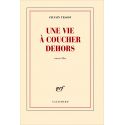
Une vie à coucher dehors
A collection of short stories by one of my favorite contemporary authors, inspired by his travels around the world. At times you almost feel like you’re right there with the characters, sailing under the Greek sun, or wandering in the biting cold of a Siberian forest.
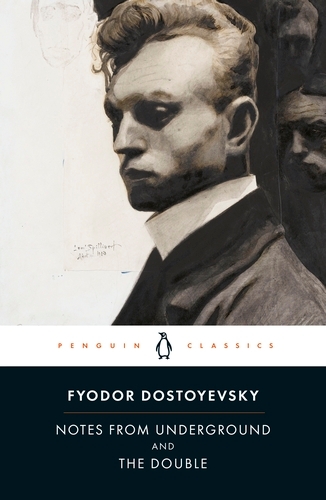
Notes from Underground
Les ingénieurs du chaos
Les ingénieurs du chaos explains how reactionary movements like MAGA, the Five Star Movement, the AfD or Viktor Orbán’s Fidesz gained popularity in recent years. It focuses on the “engineers” behind them, and the techniques they’ve developed.
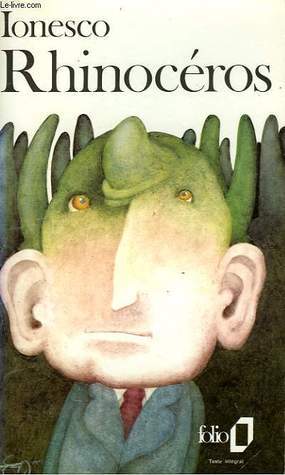
Rhinocéros
Rhinocéros is a short absurdist play, first performed in 1959, which is generally read as a metaphor for the rise of 20th-century totalitarian movements. It’s the story of a small town struck by an epidemic of “rhinoceritis” that inexplicably turns its inhabitants into rhinoceroses. The main character, a completely unremarkable man, is the only one who doesn’t. His best friend, who used to lecture him about morality and dignity, is among the first to turn, his coworkers debate the situation endlessly before transforming, and the woman he loves eventually finds the rhinoceroses beautiful and abandons him to become one herself. The only one left standing is the one no one would have really expected.
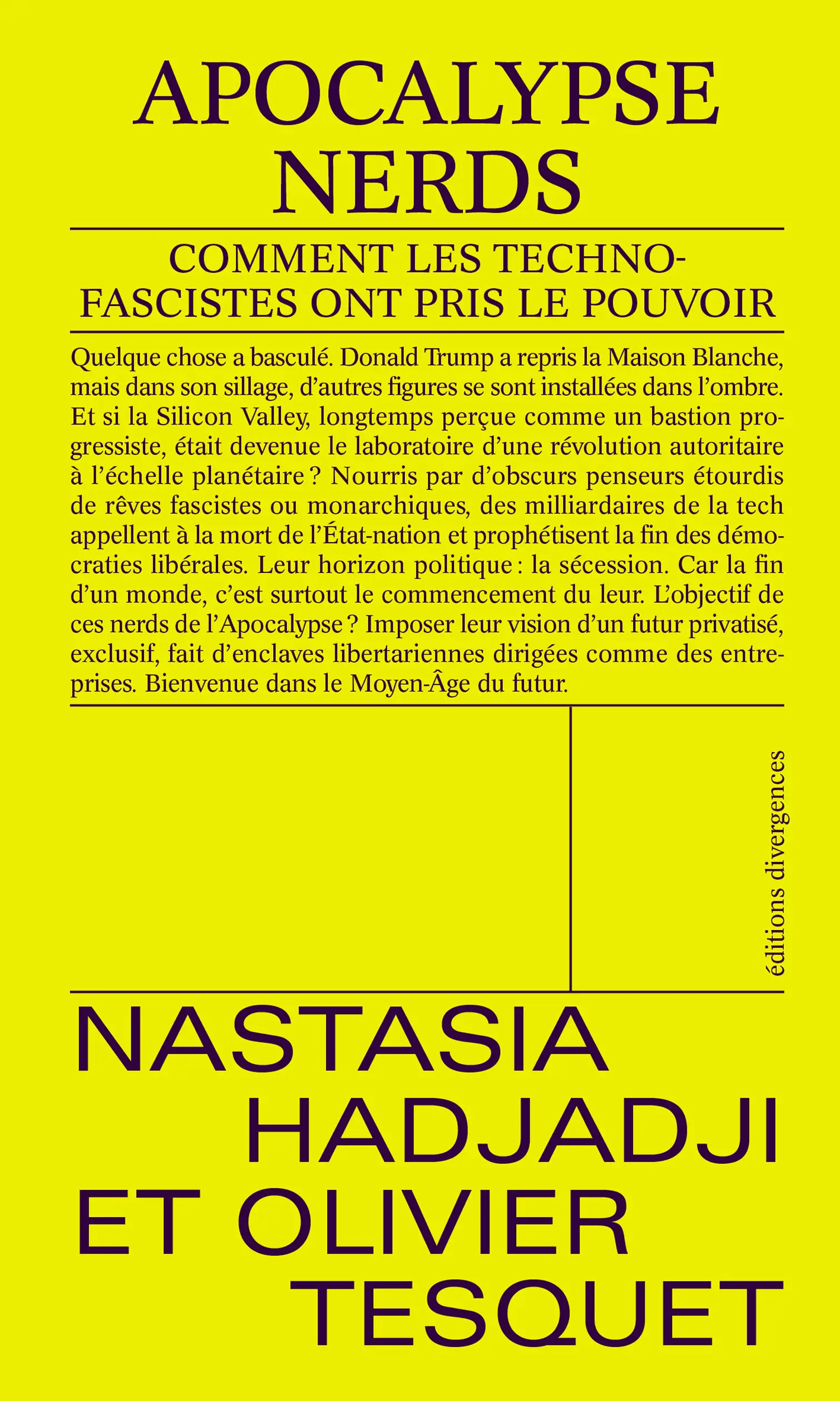
Apocalypse Nerds
I bought this one cause the title intrigued me (who are these “apocalypse nerds”??). It argues that a handful of Silicon Valley billionaires (Peter Thiel, Marc Andreessen, Curtis Yarvin, etc.) gravitating in Trump’s orbit are pushing a pretty concerning political agenda that looks a lot like fascism: replacing democracy with oligarchy, naturalizing social hierarchies, completely deregulating the economy, and so on. The authors call this “technofascism”: the idea that the tech world and far-right political agendas are colluding on a shared project that is authoritarian, anti-democratic, and excluding of most people. Very interesting read!

Eichmann in Jerusalem
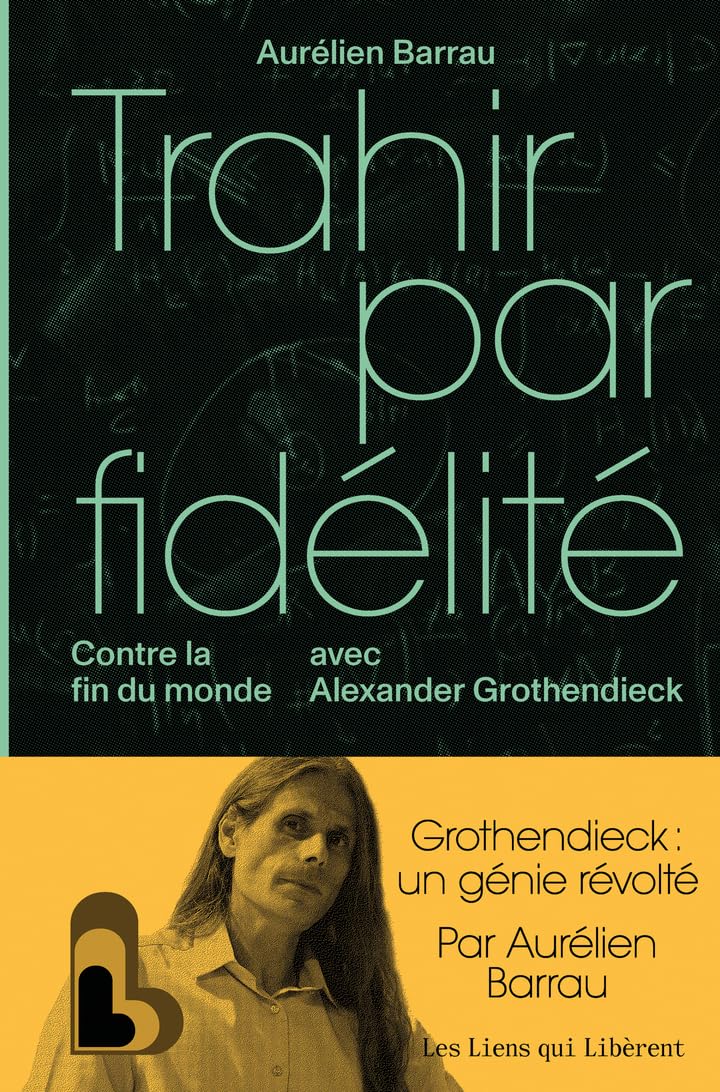
Trahir par fidélité
Years ago, I was wasting time on YouTube when I stumbled upon an extraordinary lecture by the mathematician Alexander Grothendieck that has stayed with me ever since. It’s titled “Will we continue scientific research?” I’d really recommend it to anyone. Grothendieck was a truly singular figure: a mathematical genius, Fields medalist, at the peak of his career when he suddenly walked away from the research he had devoted his life to. He had become convinced that scientific research in its current form was mostly pointless, and perhaps even responsible for some of the great problems of our time. The book tells his story.